
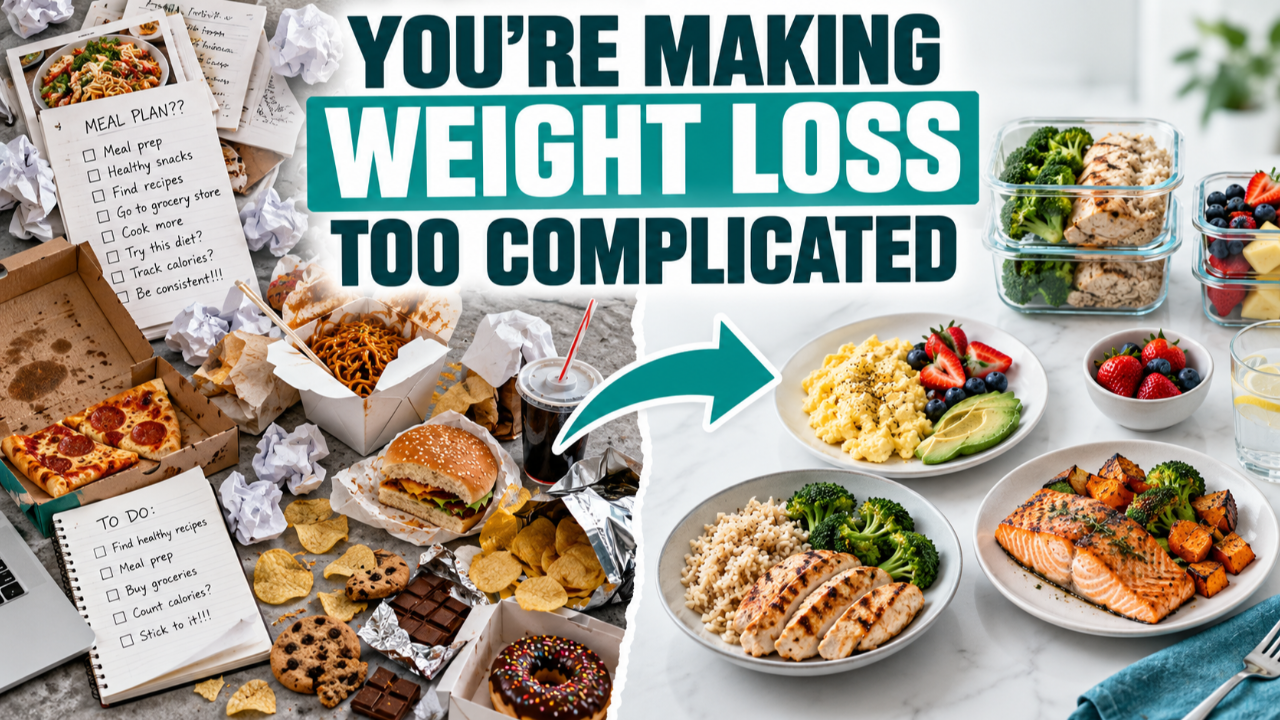
Simple Eating Leads to Simple Weight Loss
Oct 06, 2026Weight loss becomes much harder when eating feels complicated. Every meal turns into another decision, every day looks completely different, and there is very little structure to fall back on when you are busy, tired, stressed, or hungry. You do not need a more complicated nutrition plan. In many cases, you need the exact opposite. The easier your eating pattern is to understand, prepare, portion, and repeat, the easier it becomes to control how much you eat consistently.
Here are eight nutrition problems I see repeatedly that make weight loss harder than it needs to be.
1. Inconsistent Eating
When the timing and size of your meals change dramatically from one day to the next, hunger becomes much harder to manage. You may eat breakfast at 8:00 on Monday, skip it completely on Tuesday, have coffee until noon on Wednesday, then spend Thursday snacking because you never really sat down for lunch. By the end of the week, there is no predictable rhythm to your eating at all.
Constantly allowing meetings, errands, work, hunger, and convenience to decide when you eat puts you in a reactive position. Once hunger gets high enough, patience drops, portions get larger, cravings get stronger, and convenience becomes much more attractive. Now you are trying to control your eating at the exact moment it is hardest to control.
Consistency creates a framework. You know when your next meal is coming, how much food you need to prepare, and where the difficult parts of your day usually occur. That makes hunger more predictable and gives you a plan before you need one.
Scenario: Imagine two women who both plan to eat around 1,800 calories. The first wakes up late, drinks coffee, skips breakfast because she is busy, works through lunch, grabs random snacks around 3:00, then gets home starving at 6:30. She eats while cooking, serves herself a large dinner, goes back for more, then has dessert afterward. By bedtime she has eaten well beyond the amount she intended, even though she spent most of the day feeling like she barely ate.
The second woman eats breakfast around 8:00, lunch around 12:30, has a planned snack around 3:30, and dinner around 7:00. She arrives at each meal hungry enough to eat but not so hungry that she loses control of her portions. Her meals are planned, her calories are easier to manage, and the day never turns into a recovery mission.
The solution is to create general eating windows that fit your life. Breakfast might happen between 7:00 and 9:00, lunch between noon and 1:30, a snack around 3:30, and dinner between 6:00 and 8:00. Now your eating has a rhythm instead of being dictated by whatever happens that day.
2. Snacking and Grazing
Grazing is one of the easiest ways to eat far more calories than you realize. A handful of chips while standing in the kitchen does not feel like much. Neither does a few nuts from the pantry, a couple bites of your child's food, half a cookie in the break room, or a spoonful of something while cooking. Each moment feels small, but your body does not care whether the calories came from a plate, a wrapper, your child's leftovers, or your hand reaching into the pantry.
The bigger problem is that grazing often gives you the worst combination possible: plenty of calories with very little satisfaction. You can spend an entire afternoon eating and still feel like you never had lunch.
Structured meals solve that problem by giving eating a beginning and an end. You sit down, eat enough food to feel satisfied, finish the meal, and move on with your day.
Scenario: At 11:30 you grab trail mix. At noon you eat crackers. At 1:00 you take several bites of leftovers. At 2:00 you have a granola bar. At 3:15 you grab chips because dinner is still hours away. By late afternoon, you have easily consumed 600 or 700 calories and still feel like you need a meal.
Now replace that with lunch at 12:30: chicken, rice, vegetables, and fruit. Later, you have one planned yogurt. You ate a satisfying meal, you know what you consumed, and food did not follow you around for four straight hours.
The solution is simple: eat meals, use planned snacks when needed, and stop allowing food to become a background activity throughout the entire day.
3. No Meal Structure
Knowing which foods are healthy is not the same as knowing how to consistently build a meal. You can know that chicken has protein, fruit is good for you, and vegetables matter while still having no real structure to your eating.
Without a framework, breakfast might be coffee and toast one morning, nothing the next, then pancakes, bacon, eggs, and juice on Saturday. Lunch becomes whatever is easiest. Dinner becomes whatever sounds good once everyone is already hungry.
That makes calories, protein, portions, and hunger management unnecessarily difficult.
Meal structure gives you a repeatable formula. Protein should have a clear place in the meal, along with a reasonable carbohydrate source and fruit or vegetables. Fats, sauces, dressings, and toppings should fit into the meal intentionally instead of being poured, sprinkled, or added without thought.
Scenario: A woman says she never knows what to eat for lunch. Monday she orders takeout. Tuesday she eats crackers and cheese. Wednesday she skips lunch. Thursday she grabs fast food because she waited too long to decide.
Give her one simple framework: protein, carbohydrate, fruit or vegetable.
Now lunch can be chicken with rice and broccoli, turkey with potatoes and fruit, tuna with pasta and vegetables, or leftovers from dinner. The foods can change, but the structure stays intact.
The same formula makes the rest of the day easier. Eggs, toast, and fruit works for breakfast. Chicken, potatoes, and green beans works for dinner. Salmon, rice, and asparagus works too. Once you know how to build a meal, you stop reinventing nutrition every time you get hungry.
4. Overcomplicating Meals
Healthy eating becomes difficult when every meal turns into a cooking project. People save elaborate recipes, buy specialty ingredients, prepare multiple side dishes, and create meals that require far more time and energy than their normal life allows.
That approach falls apart as soon as life gets busy.
After a long workday, the dinner that requires 14 ingredients, three pans, chopping, marinating, baking, and 20 minutes of cleanup loses to whatever is fast and available. The problem was not a lack of motivation. The problem was building an eating system that required too much effort to survive a normal Tuesday.
Simple meals reduce friction. The easier food is to prepare, the easier it is to repeat.
Scenario: You get home at 6:45 after working all day. Your original recipe requires chopped vegetables, homemade marinade, roasted potatoes, chicken cooked separately, another side dish, and cleanup afterward. You are tired, so you scrap the plan and order food.
A simpler dinner would have been seasoned chicken in the air fryer, microwave rice, frozen vegetables, and a sauce you enjoy. Ten to fifteen minutes later, dinner is ready.
Frozen vegetables are still vegetables. Microwave rice is still rice. Rotisserie chicken is still protein. Precut fruit is still fruit. Your meals do not need to be impressive. They need to be easy enough to execute consistently.
5. Too Much Variety
Constant variety creates constant work.
Every new recipe means new ingredients, a new grocery list, new preparation, new portions, and another meal you have to figure out. Social media makes it seem like you need a different breakfast, lunch, and dinner every day. You do not.
Repetition is one of the easiest ways to make nutrition more consistent.
When you have a small collection of meals you already enjoy, grocery shopping gets easier, preparation gets faster, portions become familiar, and tracking gets more accurate. You stop spending so much mental energy deciding what to eat.
Scenario: One woman plans seven completely different dinners for the week. Her shopping cart is full of ingredients she will only use once, several foods spoil before she gets to them, and by Thursday she is tired of cooking. Takeout starts looking easier.
Another woman plans taco bowls Monday, leftovers Tuesday, salmon and potatoes Wednesday, chicken pasta Thursday, then repeats one of her favorites Friday. Her shopping list is shorter, preparation is easier, less food gets wasted, and she already knows how to make every meal.
Build a small rotation that works. Three breakfasts, four lunches, five or six dinners, and a few reliable snacks can handle the majority of your week.
When you have eaten the same chicken bowl 20 times, you know how much rice goes in it, how much chicken you need, how much sauce works, how filling it is, and roughly how many calories it contains. Familiarity makes consistency easier.
6. No Planning Ahead
Waiting until you are hungry to decide what to eat is one of the easiest ways to make a poor decision.
At 7:00 in the evening, after work, traffic, appointments, children, errands, and stress, you are not looking for the smartest nutrition strategy. You want food quickly. Hunger is high, patience is low, and every restaurant you drive past suddenly sounds good.
Planning moves the decision to a better time.
You decide what you are going to eat before hunger enters the conversation. That might mean planning tomorrow's meals tonight, cooking extra dinner for lunch, thawing tomorrow's protein, or simply making sure the foods you need are in the house.
Scenario: You know Wednesday will be busy because you have an appointment after work and will not get home until 7:30. Without a plan, you leave the appointment starving, drive past several restaurants, stop for takeout, order more food than you needed, and arrive home with dinner and dessert.
With a plan, you already know chicken, rice, and vegetables are waiting at home. You also ate your planned afternoon snack before leaving work, so you are not driving home desperate for food. Same busy Wednesday, completely different outcome.
Planning can also solve the breakfast problem. If mornings are hectic, prepare something the night before or keep a two minute breakfast available. Repeatedly skipping breakfast because you "didn't have time" is not a time problem once it happens every week. It is a planning problem.
7. Portions Constantly Changing
The foods you eat can stay exactly the same while your calorie intake changes dramatically.
A bowl of pasta might be 600 calories one night and 1,200 the next. The difference comes from portion size, extra sauce, more cheese, another piece of bread, larger servings, or going back for seconds.
This is why saying, "I eat pretty healthy," tells us very little about whether someone is eating the amount needed to lose weight. Healthy foods still have calories, and large portions are still large portions.
Portion awareness gives you control over the amount you are actually eating.
Scenario: Two nights both get described as "pasta for dinner." On the first night you have two large bowls of pasta, several meatballs, a generous amount of parmesan, garlic bread, and more sauce. On the second night you have a measured serving of pasta, lean protein, sauce, vegetables, and one piece of bread.
The meal name is the same. The calorie total is not even close.
This is why measuring food for a period of time is so valuable. You learn what one cup of rice actually looks like, what six ounces of chicken looks like, how much peanut butter is really on the spoon, and how many calories are hiding in the dressing you pour freely over a salad.
You cannot consistently control an amount you never learned to recognize.
8. Trying to Make Every Meal Perfect
Perfection turns simple nutrition decisions into unnecessary debates.
People spend time worrying about the perfect bread, the cleanest yogurt, whether frozen vegetables are good enough, which rice is healthiest, whether one ingredient is inflammatory, or whether a restaurant meal destroyed their progress.
Meanwhile, the decisions that actually control body weight get ignored: how many calories they eat, how large their portions are, how much protein they consume, and whether they can repeat their eating pattern consistently.
Perfection also feeds all or nothing thinking. The planned meal falls apart, so the entire evening falls apart with it. One restaurant meal becomes a weekend of overeating. One unplanned dessert becomes permission to start again Monday.
Scenario: You planned salmon, potatoes, and vegetables for dinner, but you get home late and realize the salmon is still frozen. Instead of treating the plan as ruined, solve the actual problem: you need dinner.
Pick up rotisserie chicken, use microwave rice, heat frozen vegetables, add fruit, and eat. The meal may not look like the original plan, but it still moves you toward the same goal.
The same rule applies when eating out. Look for a clear protein source, choose a reasonable side, control the portion, and eat the meal. You do not need the perfect restaurant order. You need a decision that keeps you moving in the right direction.
A useful meal beats a perfect meal you never make.
Keep It Simple
You do not need to spend your entire life thinking about food in order to control your weight. In fact, the better your nutrition system becomes, the less mental energy it should require. You know roughly when you are eating, you have meals you enjoy, your portions are familiar, groceries are predictable, and several of tomorrow's decisions have already been made.
Simple eating does not mean boring eating. It means removing unnecessary decisions and creating an approach you can actually repeat.
When your meals become simpler, consistency becomes easier. When consistency becomes easier, controlling your calories becomes easier. And when you can consistently control how much you eat, weight loss becomes much simpler too.
