

Acting As If: The Missing Link Between Wanting Weight Loss and Living It
Apr 13, 2026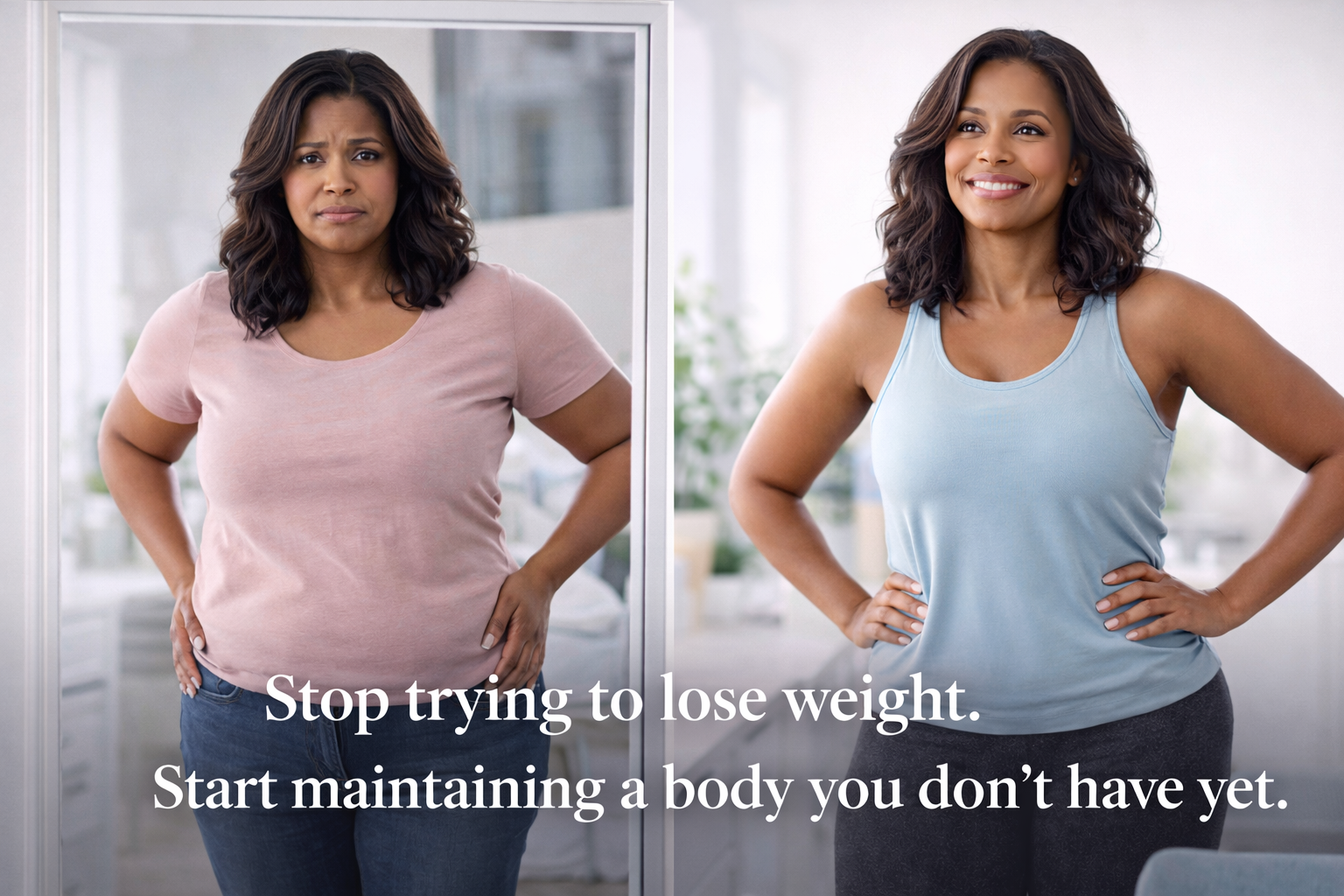
Most people approach weight loss like a temporary project.
They try to lose weight first, then figure out how to maintain it later.
That approach fails because it separates the result from the behavior that creates it.
There is a more effective way to think about this, one that is rooted in psychology and behavior change:
Act as if you already have the body and health you want, and your job is to maintain it.
Not in theory. Not in motivation. In daily decisions.
Where This Concept Comes From
The idea of “acting as if” is not new. It traces back to William James, who argued that behavior leads emotion, not the other way around.
You do not wait to become confident before you act confidently.
You act confidently, and your mind adjusts to match your behavior.
Modern psychology supports this through three key mechanisms:
Self perception theory
You build your identity by observing your own actions. If you consistently act like someone who prioritizes their health, your brain begins to label you as that person.
Cognitive dissonance
When your actions and identity conflict, your brain works to resolve the tension. If you start behaving like someone disciplined, your self image shifts to match.
Identity based habits
Lasting habits are not built on outcomes. They are built on identity. People who keep weight off do not rely on effort alone. They operate from a standard.

Why Weight Loss Feels Hard for So Many People
Most people are trying to force results without changing identity.
They say:
“I’ll start eating better once I lose weight.”
“I’ll work out more when I feel motivated.”
“I’ll take it seriously when I see progress.”
This creates a cycle where behavior depends on results, and results depend on behavior.
Nothing stabilizes.
At the same time, the environment most people live in works against them:
- Food is always available
- Movement is optional
- Convenience replaces structure
- Stress drives reactive eating
Weight gain becomes the default outcome of modern living.
So if your lifestyle stays the same, your results will also stay the same.

The Shift: From Losing Weight to Maintaining a Body
People who sustain results think differently.
They are not trying to lose weight.
They are maintaining a body that reflects their lifestyle.
That changes everything.
Because maintenance requires:
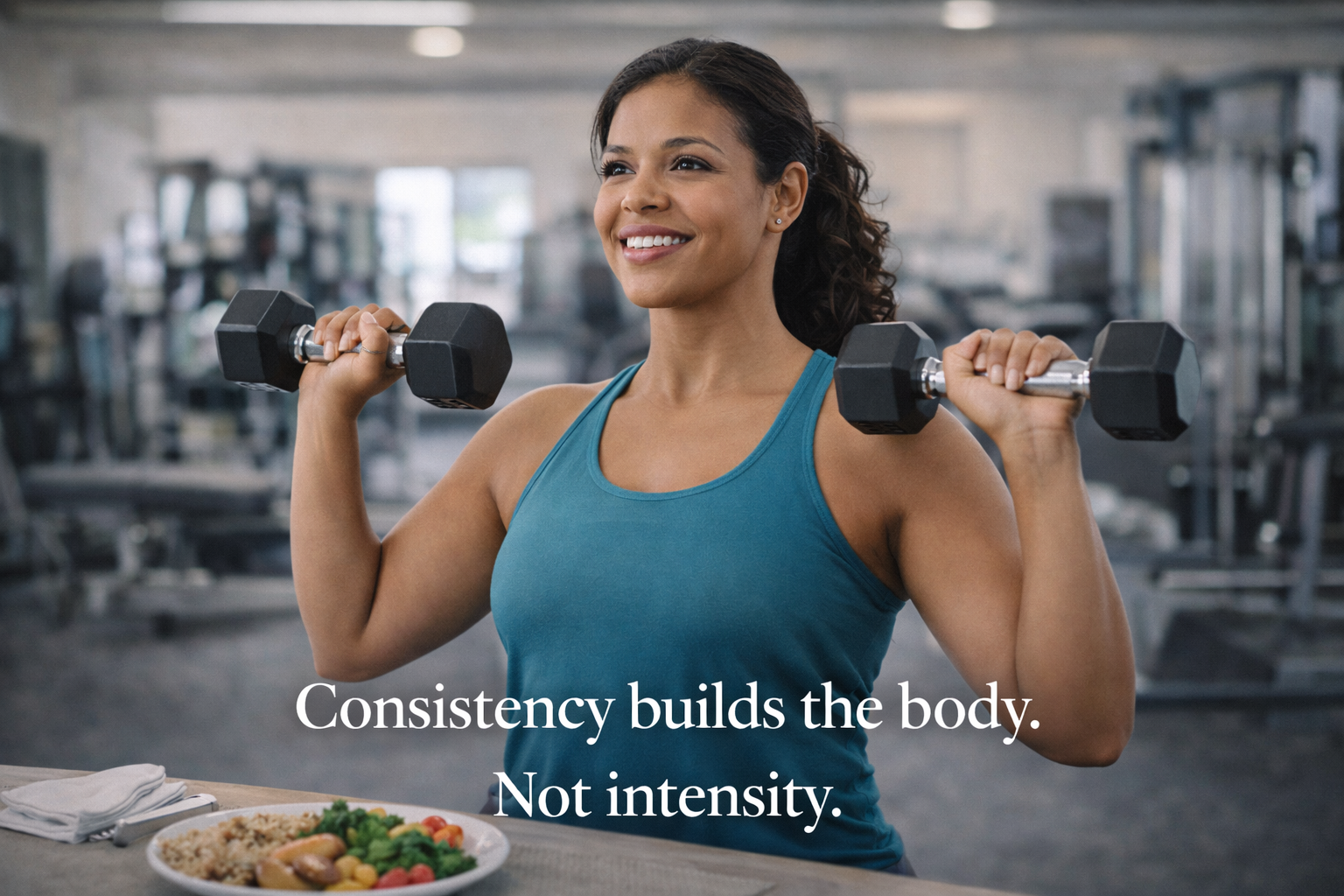
- Consistency
- Structure
- Awareness
- Adjustment
Not intensity. Not extremes.

What “Acting As If” Looks Like in Real Life
If you already had the body you wanted, your daily behavior would not be perfect, but it would be aligned.
You would:
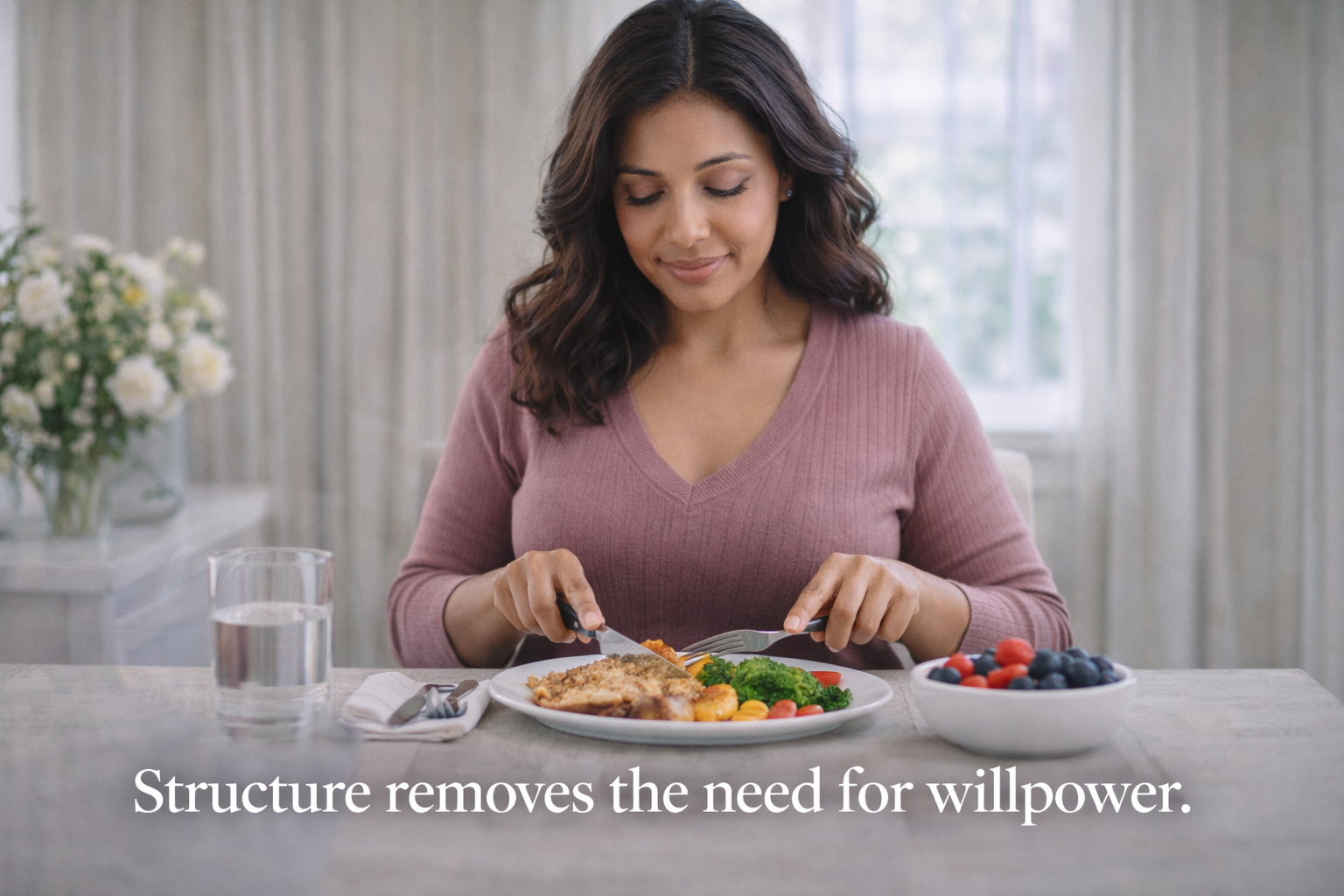
Eat with structure
Meals would be planned or at least predictable. You would not rely on hunger alone to decide when and what to eat.
Train as a baseline, not a reaction
Workouts would be part of your routine, not something you add when you feel behind.
Monitor intake without obsession
You would have awareness of how much you are eating, even if it is not perfect tracking every day.
Correct quickly
If you overeat, you adjust the next meal or next day. You do not spiral.
Plan ahead
You think about your week before it happens instead of reacting to it as it unfolds.
None of this requires you to be in shape.
It requires you to behave like someone who stays in shape.

The Most Common Misinterpretation
Many people take this concept and turn it into extremes:
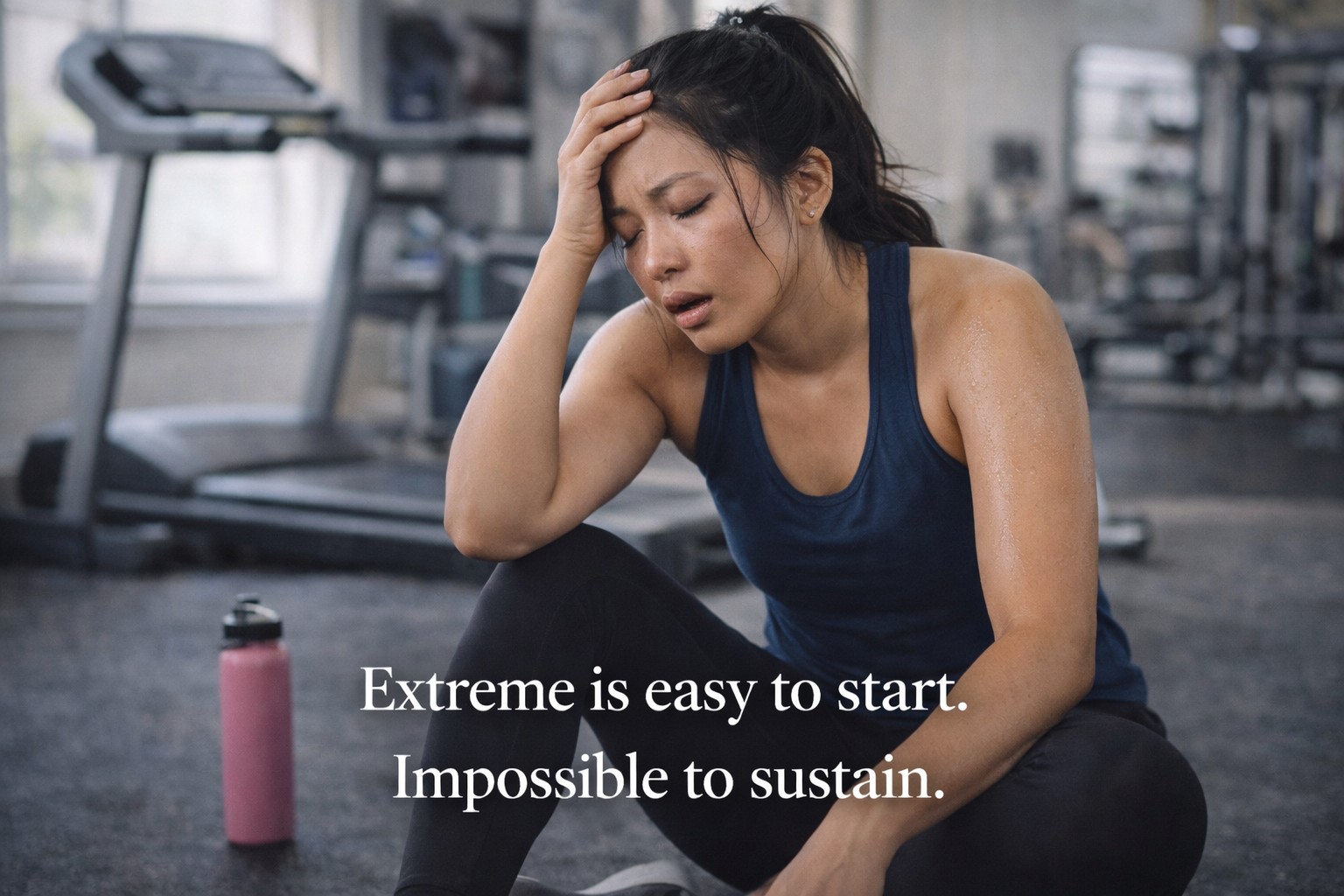
- Cutting calories too aggressively
- Training every day without recovery
- Trying to be perfect overnight
That is not “acting as if.” That is reacting emotionally.
The version that works is realistic and repeatable.
A better question to ask is:
“If I already had my goal body, what would I do this week to keep it?”
Not forever. Just this week.
That forces behavior that is actually sustainable.

Why This Works Better Than Motivation
Motivation is inconsistent.
It rises and falls based on:
- Sleep
- Stress
- Mood
- Life circumstances
If your progress depends on motivation, your results will be inconsistent.
Identity based behavior is different.
When you act like someone who:
- plans their meals
- tracks or stays aware of intake
- trains consistently
- adjusts instead of quitting
You remove emotion from the equation.
You begin to operate from a standard, not a feeling.
The Reality Most People Avoid
You do not get a new body and then learn how to maintain it.
You learn how to maintain it first.
That is what produces the new body.
This is why short term diets fail.
They focus on losing weight without teaching the behaviors required to live at that weight.
So when the diet ends, the structure disappears.
And the weight returns.
The Practical Application
If you want to apply this immediately, start here:
1. Set your structure
Decide:
- How many meals you eat each day
- Your general calorie target
- Your protein goal
- When you will train
Keep it simple and repeatable.
2. Build your baseline week
Do not aim for perfection.
Aim for consistency across:
- Meals
- Training
- Daily movement
You are building a lifestyle, not chasing a result.
3. Track or stay aware
You do not need perfect tracking.
But you do need awareness.
What gets measured gets adjusted.
4. Practice correction, not perfection
You will go off track.
The difference is how quickly you return.
Maintenance is not about never slipping.
It is about never staying off track for long.
5. Repeat until it feels normal
At first, this will feel forced.
Then it will feel intentional.
Eventually, it will feel automatic.
That is when identity has shifted.
The Real Unlock
Sustainable weight loss is not about reaching a goal.
It is about becoming the person who can live at that goal.
“Acting as if” is not pretending.
It is practicing the behaviors required to sustain the result before the result fully shows up.

Final Thought
Stop trying to lose weight.
Start maintaining a body you do not have yet.
Because the behaviors required to maintain it are the same behaviors required to build it.
And once those behaviors are in place, the result becomes predictable.
Ready to do this the right way?
The 21 Day Reset
The 21 Day Reset is designed to stop the crash dieting cycle and teach you how to set up fat loss correctly.
Inside the Reset, you will:
-
Learn how to structure your eating
-
Build strength training consistency
-
Create momentum without burnout
-
Lay the foundation for long-term fat loss
This is the best place to start if you want clarity, structure, and early visible results.
Join The Next 21-Day Rest
1 on 1 Coaching
If you want:
-
A personalized fat loss strategy
-
Weekly adjustments based on real data
-
Accountability that prevents self-sabotage
-
Results that actually last
Then, 1-on-1 coaching is the fastest and safest way to lose 20 pounds of body fat and keep it off.
Apply For Coaching
God Bless. Let's Work.
