
The 3 Barriers Preventing You From Losing Weight and Keeping It Off
Jun 22, 2026If you have been trying to lose weight for years, you already know how frustrating the process can become.
You start with good intentions. You get focused, clean up your eating, start exercising, maybe even lose weight for a period of time. Then life gets busy, the plan becomes harder to follow, progress slows down, and eventually you find yourself back in a place you promised yourself you would not return to.
That cycle can be exhausting.
It is not just about the number on the scale. It is the way your clothes feel. It is the frustration of not feeling like yourself. It is the anxiety before a doctor’s appointment. It is the disappointment of knowing you are capable of more, but not being able to stay consistent long enough to create the change you want.
If that has been your experience, the problem is not that you need another random diet, another extreme challenge, or another temporary burst of motivation. The problem is usually much deeper than that.
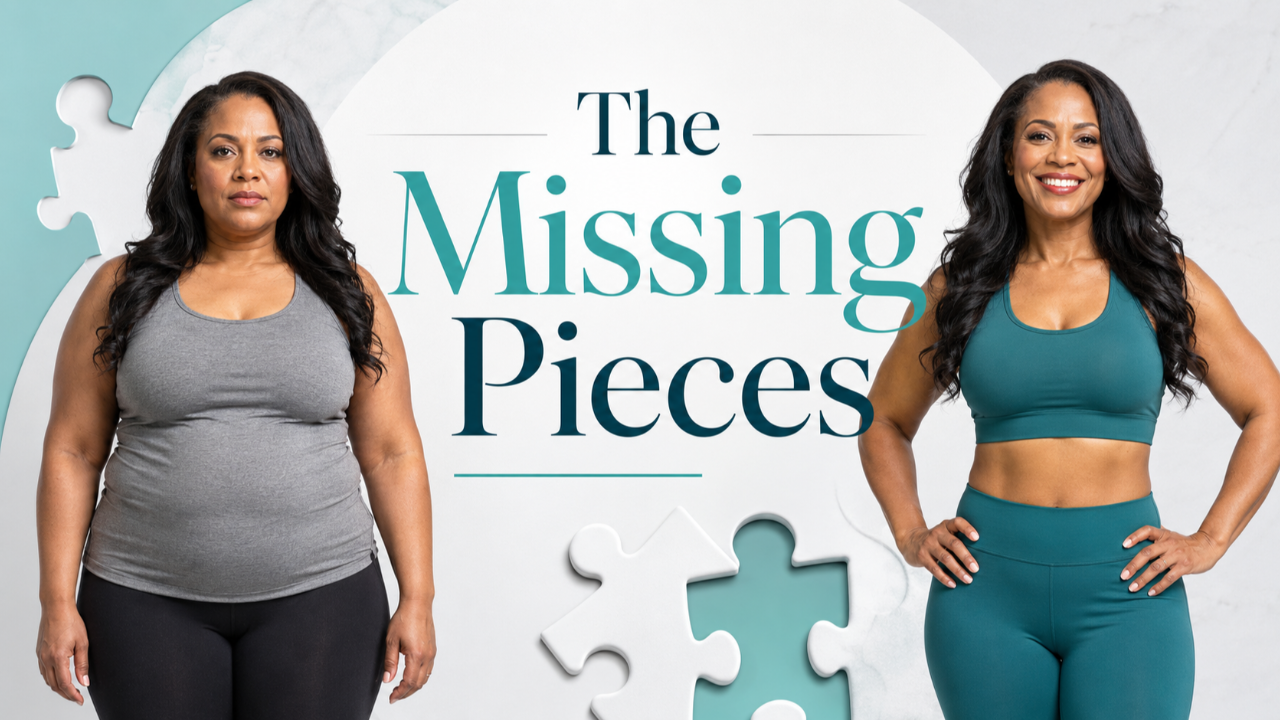
Long-term weight loss requires three things working together: understanding, structure, and continuous execution.
When one of those pieces is missing, progress becomes difficult to sustain. When all three are missing, weight loss can feel like a constant restart.
That is why there are three major barriers that must be addressed if you want to lose weight and keep it off.
Barrier #1: You Do Not Have the Right Foundation
The first barrier is a lack of foundational understanding.
This does not mean you have never heard weight loss advice before. You have probably heard more than enough advice. Eat less. Move more. Cut carbs. Fast longer. Stop eating at night. Do more cardio. Drink more water. Take this medication. Try this meal plan. Follow this challenge.
The issue is not always access to information. The issue is that the information is often scattered, incomplete, or disconnected from the bigger picture.
A real foundation teaches you how weight loss works, why it works, what causes it to stop working, and what needs to happen after the weight is lost. Without that foundation, you are left guessing. Every plateau feels confusing. Every fluctuation feels emotional. Every failed attempt makes you question whether your body is the problem.
Your body is not broken, but your approach may be incomplete.
Weight loss is not governed by trends. It is governed by principles. Any method that produces fat loss must create the right internal and external conditions for fat loss to occur. The method can change, but the principles do not.
That is an important distinction because many people spend years searching for the perfect method while never learning the principles underneath it. They know how to follow rules, but they do not understand the reason behind the rules. They know how to start a diet, but they do not know how to transition out of one. They know how to restrict, but they do not know how to regulate.
This is where the foundation becomes essential.
You need to understand the role of calories, protein, strength training, daily movement, metabolism, hunger, maintenance, and adaptation. You do not need to become a scientist, but you do need enough education to stop being dependent on every new trend that promises fast results.
The goal is not just to lose weight. The goal is to understand your body well enough to stop starting over.
Barrier #2: You Do Not Have a Long-Term System
Understanding the fundamentals matters, but knowledge alone does not change your body.
The second barrier is not having a system that helps you apply what you know in real life.
This is where many plans fall apart. A diet can tell you what to eat for a few weeks. A challenge can give you workouts for a short period of time. A medication can help reduce appetite. A fitness class can get you moving. Those tools may help create short-term progress, but they do not automatically create long-term ownership.
A system is different.
A system answers the questions temporary plans ignore.
How are you going to eat when you are trying to lose weight? How are you going to eat when it is time to maintain? How are you going to train in a way that progresses over time? How are you going to handle weekends, vacations, holidays, stress, social events, work demands, family responsibilities, and the seasons of life when motivation is low?
These questions matter because your life does not pause just because you have a goal.
You still have responsibilities. You still have stress. You still have people who need you. You still have days when you are tired, emotional, busy, overwhelmed, or pulled in several directions at once.
That does not mean success is impossible. It means the plan has to be built for reality.
A long-term system should give you structure without making your life feel smaller. It should help you make better decisions without making you feel trapped. It should teach you how to eat, how to train, how to move, how to plan, and how to adjust when life changes.
This is why temporary solutions often lead to temporary results. They may create movement, but they do not always create mastery. They may help you lose weight, but they do not always prepare you to live at the new weight.
Permanent results require a system that teaches you how to become the kind of person who can maintain them.
Barrier #3: You Do Not Continuously Execute
The third barrier is continuous execution.
This is where everything becomes real.
You can understand the fundamentals and still not apply them. You can have a plan and still not follow it. You can know exactly what needs to happen and still talk yourself out of doing it when you are tired, stressed, busy, or emotional.
That is why execution cannot depend on motivation alone.
Motivation is useful, but it is unreliable. It comes and goes. It is strong when the goal feels exciting and weak when life becomes inconvenient. If your entire plan depends on feeling motivated, the plan will eventually break.
Continuous execution requires a different level of structure. It requires planning before the week begins, preparing before the day gets chaotic, and following through even when the excitement is gone. It requires fewer negotiations, fewer restarts, and fewer emotional decisions around food, workouts, and daily movement.
This does not mean perfection.
Perfection is not the goal. The goal is building a repeatable process that brings you back to the standard quickly when life pulls you away from it.
That is the difference between dieting and transformation.
Dieting says, “I am doing this until I lose the weight.”
Transformation says, “This is how I live now.”
When your identity changes, your behavior changes. You no longer see training, planning, walking, tracking, eating with intention, or prioritizing your health as temporary tasks. They become part of how you operate.
This is the level of execution required for lasting results.
Not extreme execution.
Continuous execution.
Why These Barriers Matter
If weight loss has felt harder than it should, there is a good chance one of these barriers is still in the way.
You may have effort without understanding.
You may have understanding without structure.
You may have structure without consistent execution.
Each barrier creates a different problem, but the result is usually the same: temporary progress followed by another restart.
This is why losing weight once is not the real victory. Solving the pattern is the victory.
The goal is not to spend the rest of your life dieting. The goal is to build the education, system, and execution skills that allow you to lose weight, maintain it, and finally feel in control of your body again.
Get Lifted University Is Here to Help You Transform Your Body and Health
Inside Get Lifted University, you’ll get the guidance, coaching, and step-by-step system you need to lose weight, improve your nutrition, build strength, and create a fit and healthy lifestyle you know how to maintain.
No more guessing. Follow the process, get the support, and keep moving toward your goals.
Want to Work Directly With Coach Dom?
Click Here to Apply for 1-on-1 Coaching
